
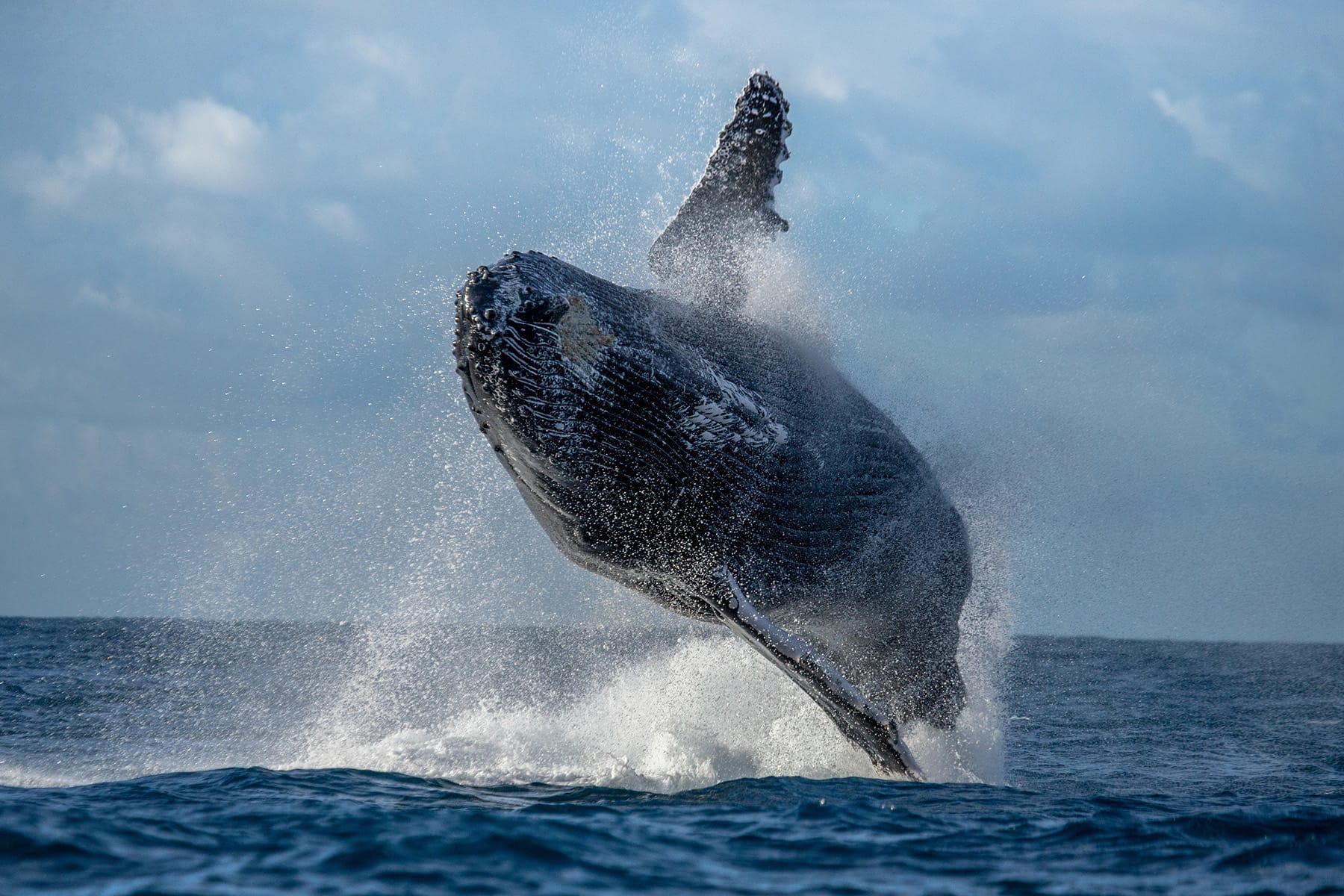
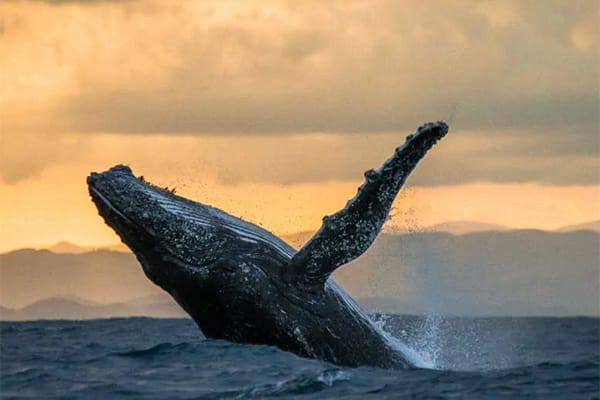
A humpback whale breaching clear of the water off Lahaina, Maui
Lahaina, Maui · Dec 15 – Apr 12

Eye level with the humpbacks

Twenty seats. One low-riding raft. The closest you can legally get to a 40-ton humpback — on the same stretch of water they cross an ocean to reach. Small-group whale watching from Lahaina, run by the family that owns the boat.

From $70 adults / $50 children · daily December 15 – April 12

  • 4.9★★★★★Rated by 757 guests
  • GuaranteedSee whales, or your next trip is free — or your money back
  • 20 seatsEvery one of them front row. No upper deck, no crowd.
  • Since 2021Family-owned. Run from Lahaina Harbor by the Dive Maui crew.
Why the boat matters

Meet a humpback at eye level, not from an upper deck

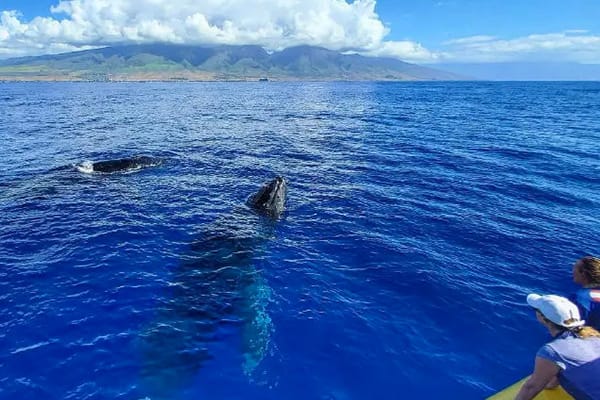
Most whale watching boats on this coast carry a hundred people or more, and you watch the whales from a deck above the water. Hoku is a 37-foot custom-built raft that sits at the surface and carries 20 guests. When a humpback comes up alongside, it comes up beside you — close enough to hear it breathe.

We hold the federal 100-yard limit, as everyone must. Then we cut the engines and wait. Humpbacks are curious, and they close that distance themselves far more often than you would think.

  • 360-degree views — nothing between you and the water
  • A hydrophone piped through the boat, so you hear the singing
  • A marine naturalist beside the captain on every trip
  • Fast to the whales, so the time goes where it counts

Meet Hoku and the family

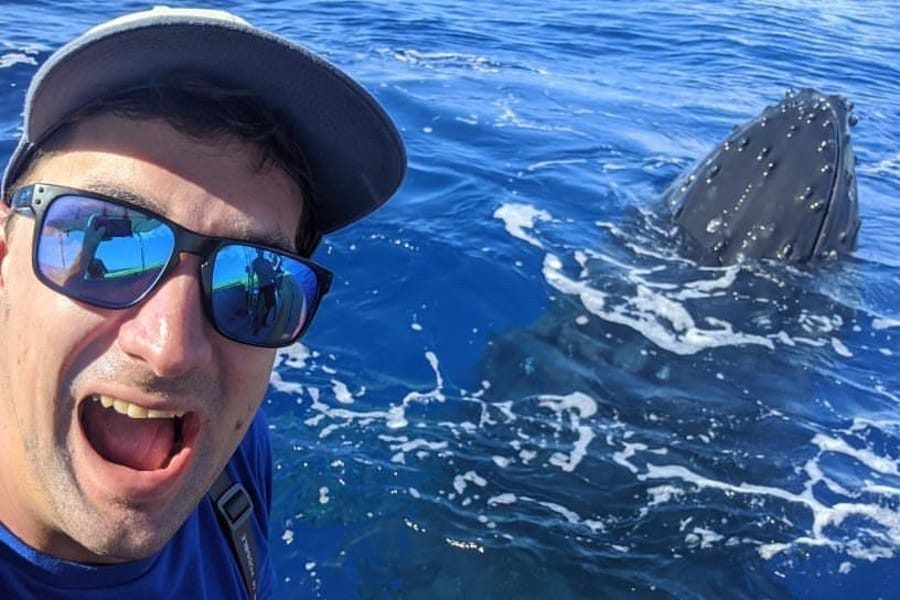
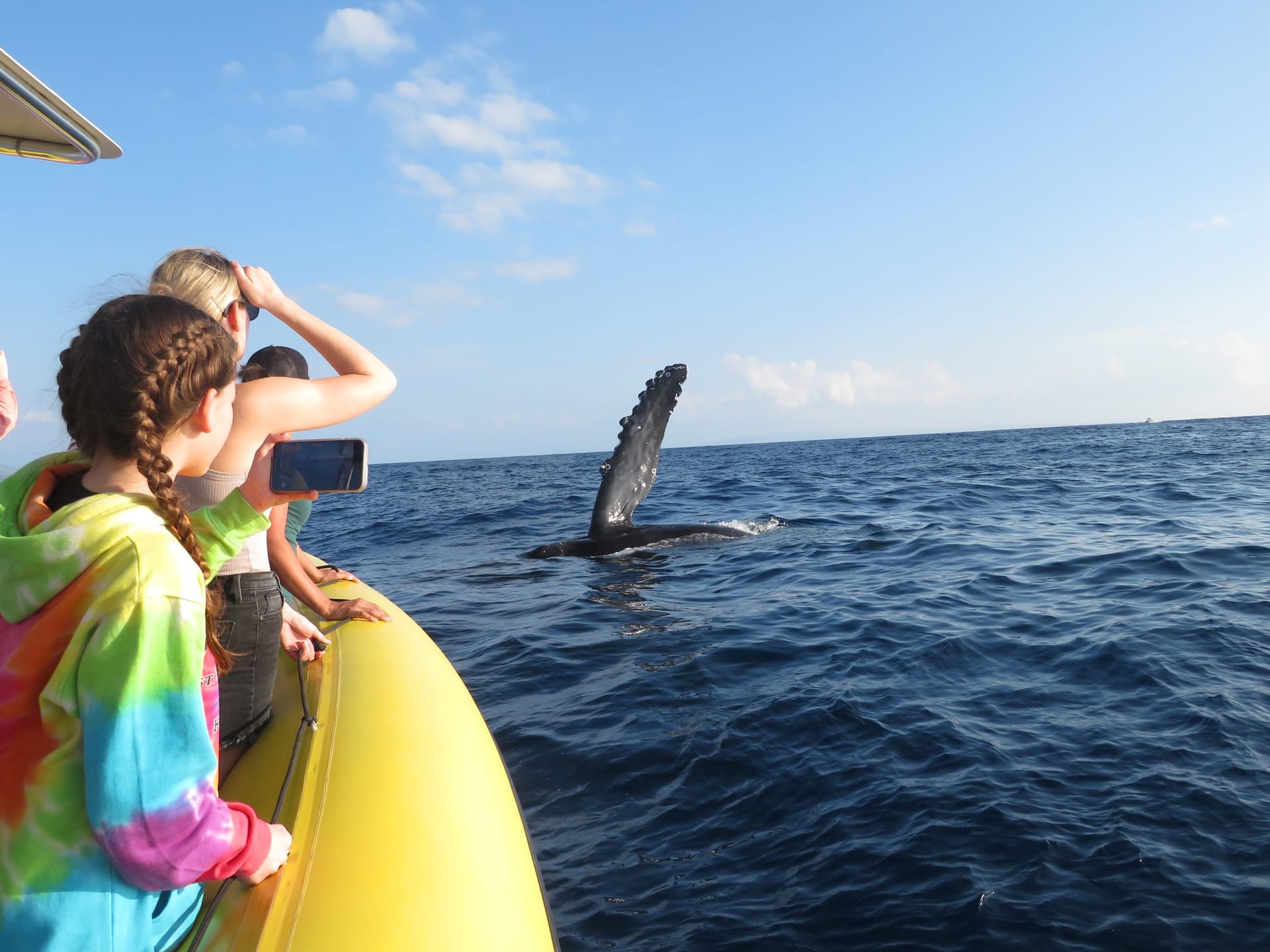
A guest grinning as a humpback whale surfaces right beside the boat off Maui
Tours & pricing

Two trips. One raft. Whales guaranteed.

Both run daily through the season with a naturalist aboard. The only real question is how long you want to stay out there.

1.5 hours whale watch

$70 / adult

$50 per child, ages 3–12 · 1.5 hours on the water

Same raft, same crew, same guarantee, ninety minutes. The right call for young kids, or a day that already has a luau at the end of it.

  • 90 minutes on the water in the Au’au Channel
  • Twenty front-row seats, eye level with the whales
  • Hydrophone aboard — hear the males singing
  • Marine naturalist and captain on every departure
  • Filtered water, cups and rain ponchos aboard
  • Whale sighting guarantee — or your money back
Book the 1.5 hours trip

Full tour details, departure times and policies →

What is included

What every ticket comes with

A naturalist on every trip

A marine naturalist rides alongside the captain on every departure, so your questions get answered while the whale is still in front of you.

Hear them sing

We drop a hydrophone over the side and pipe the song through the boat. In January and February it is loud enough to feel in your chest.

Whales guaranteed

If we do not find whales, you go again for free or take your money back — your choice. We have rarely had to honour it.

Twenty front-row seats

Hoku is a 37-foot custom-built raft, not a 150-passenger catamaran. Every seat is on the water, and nobody is three rows back.

Filtered water aboard

Refills and paper cups instead of single-use plastic bottles.

Ponchos for the squalls

Kept aboard for the days a shower blows through. Some of our closest encounters have happened in the rain.

The boat

Take a look around Hoku

Thirty-seven feet of custom-built raft, twenty front-row seats, and a 360° view of the channel. Spin her around and see for yourself.

Drag to rotate · scroll or pinch to zoom · tap a marker for detail

  • Full shade canopyShade over the seats for the midday trips, open sky at the rail for the photographers.
  • Twenty front-row seatsEvery seat faces the water with a backrest behind it. Nobody watches over a shoulder.
  • Low to the waterA rigid-hull inflatable sits at the surface, so a surfacing humpback meets you at eye level.
  • Twin 300 HP outboardsFast out to the channel. Then we shut them down, drift, and let the whales come to us.
When to come

Maui’s whale season, month by month

Humpbacks are in Maui waters from roughly November to April. February and March are the peak — but every month of the season has something the others do not, and our favourite guests come back every December.

Building

December

The season opens. Fewest boats on the water.

High

January

Numbers climb fast. Whale song at its clearest.

Peak

February

Peak season. Most whales, most surface activity.

Peak

March

Peak continues, calves everywhere. Best month for mother-and-calf encounters.

Tapering

April

The long goodbye. Quiet water, late calves.

Read the full season guide

On the water

What a normal trip looks like

On the water

Filmed from Hoku, not stock

Short clips from our own trips. Every one was shot from the boat you will be on.

Pectoral fins at sunset A humpback rolls beside the bow at golden hour, white pectorals flashing under the surface.
Spyhop at the tube A whale lifts its head clear of the water an arm’s length from the rail to have a look at us.
Surfacing beside the boat Engines off, drifting. The whale closed the distance itself.

More from the water

★★★★★ 4.9 from 757 reviews

What our guests say

Every review below is a verified guest review, from our Google profile or our Viator whale-watch listings under Dive Maui. Nothing is edited except spelling.

Guest reviews

4.9 / 5

★★★★★

757 reviews

Across Google and Viator

★★★★★
“Naturalist & Captain Marina were GREAT guides for our family of 13, ranging from 3-71 for our early morning whale watching. Their enthusiasm was infectious and their knowledge deep. “Best experience of my life, so far,” said our 11 yr old grandson. What a great Maui experience to see mother humpback whales teaching their babies to swim, breach, breathe, & dive. HIGHLY RECOMMENDED!”

Mary Crawford · Google review

★★★★★
“The crew did an amazing job at providing us information about the whales and the islands as well as getting us about as close as you can get to a baby humpback, his momma and 2 escort whales. They were rolling right next to our boat and swimming under us almost the entire time. They were professional, on time and incredibly friendly — truly embracing everything Aloha!”

Shelly Lupo · Google review

★★★★★
“A wonderful whale watch experience! Renea was very knowledgeable and engaging. Justin got us lots of awesome whale sightings. It was a great last day on the water! A hui hou!!!”

Christina Montana · Google review

★★★★★
“This was the best whale watching experience I could ever imagine. Our captain joined a small circle of boats and a young whale came over to our boat and stayed with us for 30 minutes, just going under and around our boat.”

Leilani N. · Viator review

★★★★★
“Captain Will and self-proclaimed ‘whale nerd’ Renee were the best guide team! They had tons of knowledge about all things whale and knew exactly where to go to see the most whale activity. This small group setting is a great way to have an awesome whale experience!”

Tamara P. · Viator review

★★★★★
“We saw whales up close within 5 minutes of leaving the dock! Our guides were amazing and answered every question we had.”

Shane M. · Viator review

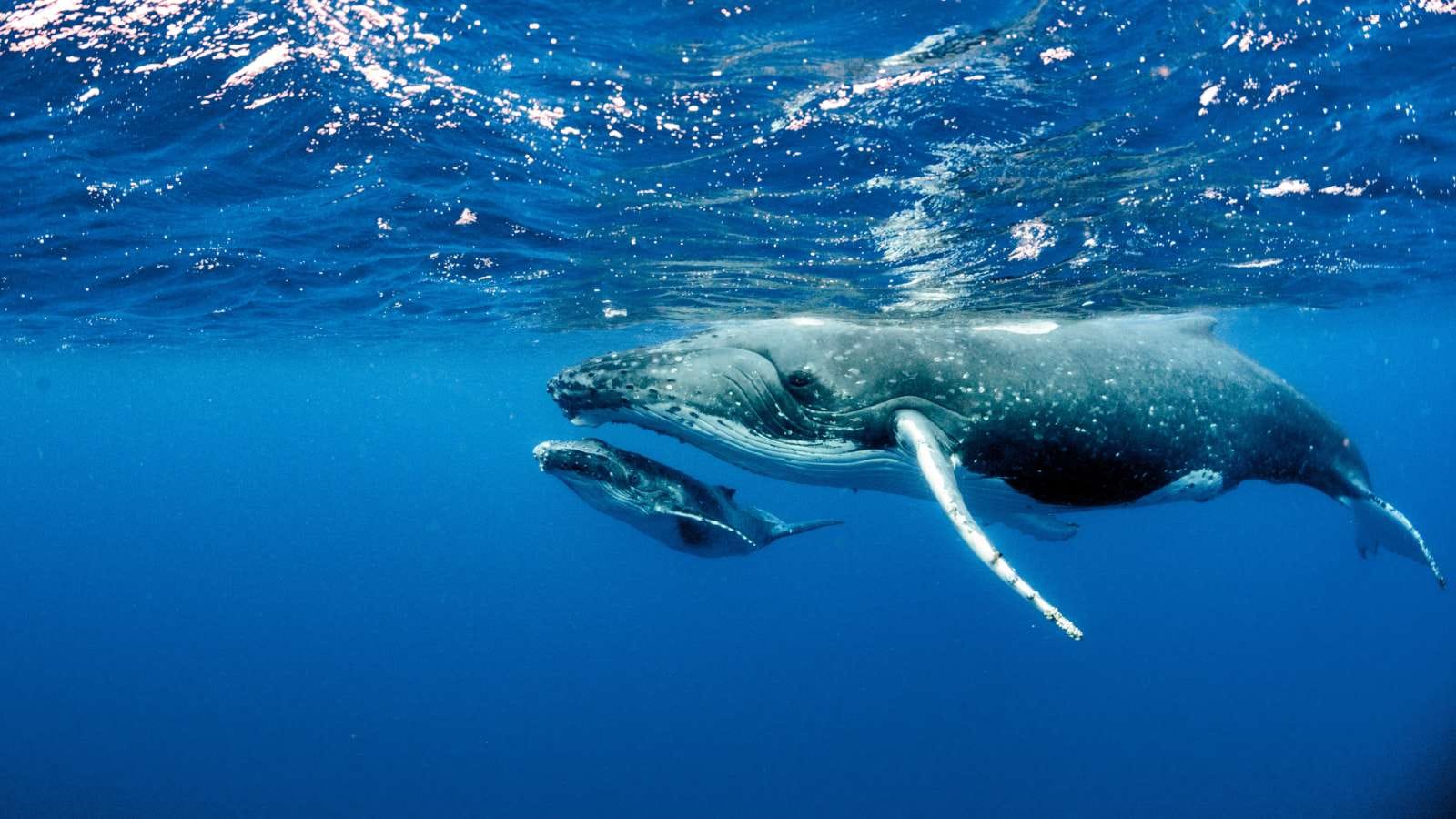
A humpback whale mother and her calf swimming together in clear blue water off Maui
Why here

Why humpbacks cross an ocean to reach this channel

Every winter, humpback whales leave the cold, food-rich water off Alaska and swim roughly 3,000 miles to Hawai‘i. They do it on empty stomachs, to water with almost nothing in it to eat, and they do it because of the calves.

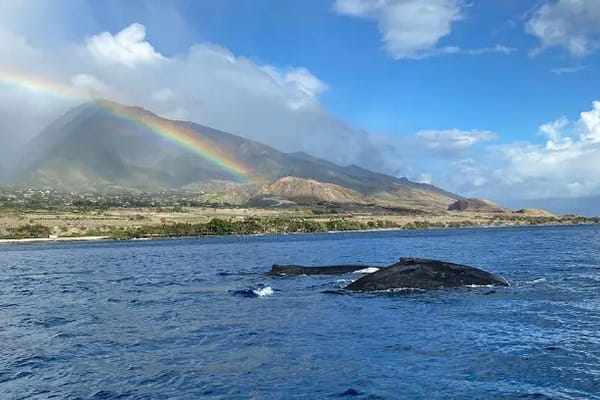
The Au‘au Channel — the shallow, sheltered water between Maui, Lana‘i and Moloka‘i, inside the Hawaiian Islands Humpback Whale National Marine Sanctuary — is warm, calm and largely free of the predators that hunt newborn whales further north. It is one of the most important humpback nurseries on earth, and it starts twenty minutes from our dock.

In Hawaiian, the humpback is koholā, and for many families it is an ‘aumākua — an ancestral guardian. Their return each winter is not just a wildlife event here. It is a homecoming.

The science behind the migration →

What to bring

  • Sunglasses — polarised if you have them, they cut the glare and help you spot whales
  • A hat that will stay on at 25 knots
  • Reef-safe sunscreen (required — oxybenzone and octinoxate are banned in Hawai‘i)
  • A camera or phone, ideally on a strap
  • A light windbreaker for the early and late departures
  • A reusable water bottle to refill aboard

Good to know

  • Guests must be at least 3 years old.
  • We cannot take pregnant guests — a rigid-hull inflatable is a lively ride.
  • Free cancellation up to 24 hours before departure.
  • Whales guaranteed: no whales, no charge — go again free or take a refund.
  • Check in at 1223 Front Street 30 minutes before your departure time.
Questions

Before you book

When is whale season in Maui?

Humpbacks are in Maui waters from roughly November through April, and our own season runs daily from December 15 to April 12. February and March are the peak — that is when the greatest number of whales, the most surface activity and the highest concentration of mothers with calves are all in the channel at once.

Will I definitely see whales?

In peak season, almost certainly. We back it with a whale sighting guarantee: if we do not find whales on your trip, you can come again for free or take a full refund. No arguing about it.

How close do you get to the whales?

Federal law sets the minimum at 100 yards from a humpback in Hawaiian waters, and we hold to it. What we can do is shut down the engines and wait — and whales regularly close that distance themselves out of curiosity. Because Hoku sits low to the water, a whale that surfaces beside us is genuinely at eye level, which is a very different thing from looking down off an upper deck.

What is the best time of day to go?

Whale activity is fairly steady across the day, so pick the conditions you want. Early morning is the calmest water and the softest light. Midday gives the clearest blue water for spotting whales under the surface. The 3:45 pm golden-hour trip is the photographers’ choice. Competition pods are often liveliest in the afternoon.

How many people are on the boat?

A maximum of 20, and often fewer. Hoku is a 37-foot rigid-hull inflatable with outward-facing seats, so everybody is on a rail with an unobstructed view. Large catamarans on this coast run 100 to 150 passengers.

Is it suitable for children?

Yes, from age 3 and up, and children’s pricing runs to age 12. A rigid-hull inflatable is a livelier ride than a big catamaran, which most kids love. If anyone in your group is prone to seasickness, take medication an hour before you board and choose an early departure when the water is flattest.

All frequently asked questions →

Ready to look a whale in the eye?

Twenty seats, a marine naturalist on every trip, and whales guaranteed. Daily from December 15 to April 12.

From $70Adult · 1.5 hr trip
Book a whale watch